

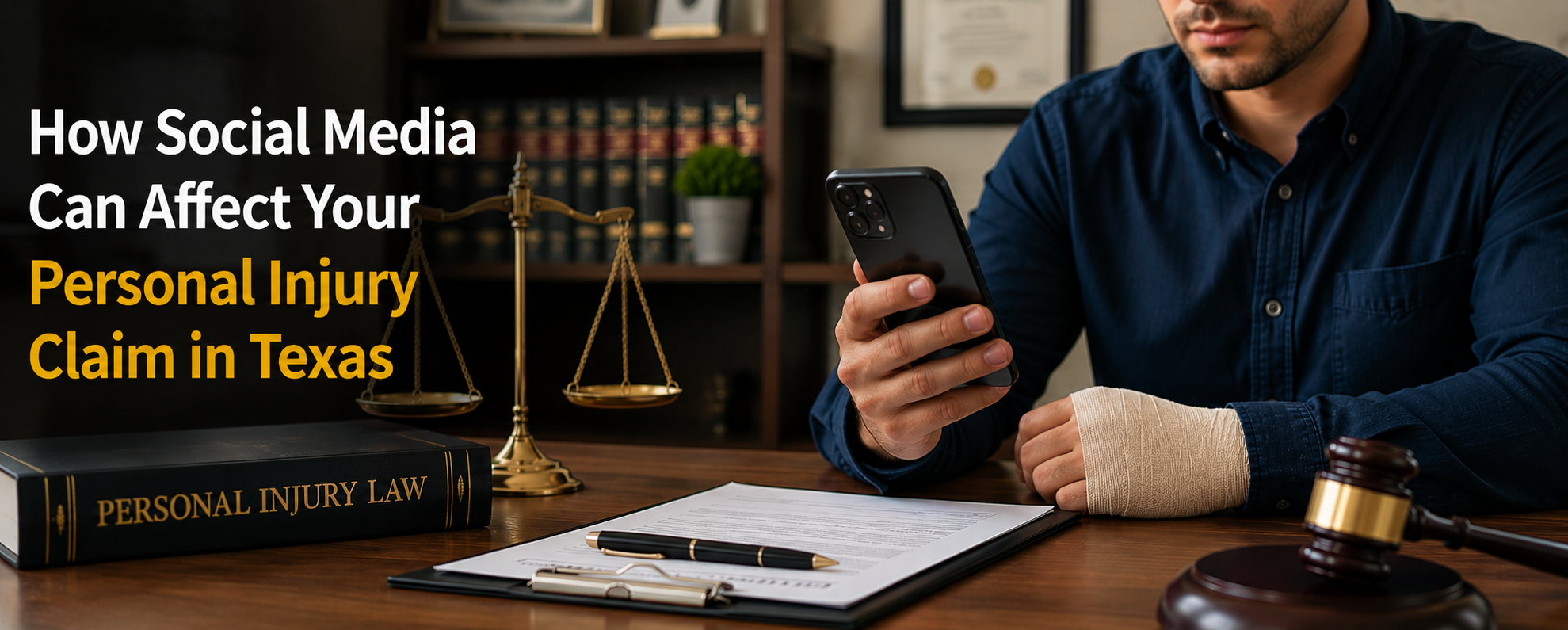
After an accident, most people turn to family and friends for support. Today, that support often happens online. Whether it’s posting an update on Facebook, sharing photos on Instagram, checking in at a restaurant, or uploading a video to TikTok, social media has become a routine part of daily life. Many people post without giving it a second thoughtHowever, if you are pursuing a personal injury claim in Texas, what you share online could have serious consequences for your case.
Insurance companies, defense attorneys, and investigators increasingly review social media activity when evaluating injury claims. A single photo, comment, or post taken out of context can be used to challenge your credibility, dispute the severity of your injuries, or reduce the value of your claim.
What may seem like an innocent update to friends and family can quickly become evidence in a legal dispute.
Understanding how social media can affect your personal injury claim is essential if you want to protect your rights and maximize your potential recovery.
Why Social Media Matters in Personal Injury Cases
- Personal injury claims often come down to evidence.
- Insurance companies and defense lawyers are constantly looking for information that helps them reduce liability or minimize the amount they must pay.
- Social media provides an enormous amount of information about a person’s activities, lifestyle, physical condition, and daily routines.
- Unlike conversations with friends, online posts often create a permanent record.
- Even deleted posts may sometimes be recovered through legal processes or screenshots.
- This makes social media a valuable source of information for parties defending against injury claims.
- From their perspective, a claimant’s online activity may reveal inconsistencies between what is being claimed and what appears to be happening in real life.
- Whether those inconsistencies are real or merely perceived, they can create challenges for your case.
How Insurance Companies Use Social Media Against Claimants
Insurance adjusters are trained to investigate claims thoroughly.
This investigation frequently includes reviewing public social media accounts.
In some cases, investigators may monitor:
- Facebook posts
- Instagram photos
- TikTok videos
- X (formerly Twitter) updates
- LinkedIn activity
- Public comments and interactions
The goal is simple. They want to find evidence that undermines your claim.
For example, if a claimant alleges severe back injuries but later posts photos from a vacation, social gathering, sporting event, or outdoor activity, the insurance company may argue that the injuries are not as serious as claimed.
Even if the photograph captures only a brief moment and does not reflect the person’s actual pain levels, it can still be used as part of the defense strategy.
The Problem With Context
One of the biggest dangers of social media is that posts rarely tell the full story. Imagine someone recovering from a serious accident attends a family birthday party for a few hours. A single smiling photograph may be posted online.
The image does not reveal:
- The pain experienced before attending
- The medication required
- The need to leave early
- Days of recovery afterward
Yet an insurance company may present that photo as evidence suggesting the claimant is not seriously injured.
Social media allows isolated moments to be viewed without context.
Unfortunately, legal disputes often arise from those incomplete interpretations.
Common Social Media Mistakes That Can Harm a Texas Injury Claim
Many claimants unintentionally damage their own cases because they underestimate how online activity can be interpreted.
One common mistake is discussing the accident itself. Posts about who was at fault, what happened, or how the incident occurred can later be compared against official statements, police reports, medical records, and testimony.
Even small inconsistencies may be used to challenge credibility. Another mistake involves posting updates about physical activities. Photos showing exercise, travel, recreation, or social events may be used to argue that injuries are exaggerated. Even comments such as:
“I feel great today.”
or
“Back to normal.”
can create problems if they conflict with medical records or injury claims. The issue is not necessarily whether the statement is accurate. The issue is how the statement may be interpreted.
Privacy Settings May Not Fully Protect You
- Many people believe that private accounts are safe from scrutiny.
- Unfortunately, privacy settings are not a guarantee.
- While privacy controls may limit public access, content can still become discoverable in certain circumstances.
- Friends may share posts.
- Screenshots may circulate.
- Court orders may require disclosure of relevant information.
- In some cases, litigants may be required to produce social media content during the discovery process if it is relevant to the issues being litigated.
- Assuming that private content is completely protected can be a costly mistake.
Can Deleted Posts Create Problems?
- Some individuals react to these risks by deleting content after filing a claim.
- This approach can be dangerous.
- Once litigation is reasonably anticipated, parties generally have a duty to preserve potentially relevant evidence.
- Deleting posts, photographs, messages, or account information after an accident could create allegations of evidence destruction.
- In certain situations, courts may impose sanctions or allow adverse inferences against parties who intentionally destroy relevant evidence.
- If you are concerned about existing content, it is best to discuss the issue with your attorney before taking action.
What Should You Do During a Personal Injury Claim?
The safest approach is often the simplest.
Limit social media activity while your claim is pending.
This does not necessarily mean abandoning social media entirely, but it does mean exercising caution.
Avoid discussing:
- The accident
- Your injuries
- Settlement negotiations
- Medical treatment
- Physical activities
- Legal proceedings
It is also wise to ask family members and friends not to tag you in photographs, comments, or posts related to activities that could be misinterpreted.
Remember that even well-intentioned posts can create unnecessary complications.
Why Credibility Is Everything
- In many Texas personal injury claims, credibility becomes one of the most important factors influencing case value.
- Insurance companies evaluate whether they believe a claimant’s statements regarding injuries, pain, limitations, and losses.
- Defense attorneys look for inconsistencies that can weaken testimony.
- A social media post may seem insignificant on its own.
- However, when combined with other evidence, it can become a tool used to challenge credibility.
- Protecting your credibility often means protecting your claim.
The Importance of Following Your Attorney’s Guidance
Every personal injury case is unique.
The type of accident, the severity of injuries, and the legal issues involved all affect how evidence is evaluated.
An experienced Texas personal injury attorney can provide guidance regarding social media use and help ensure that avoidable mistakes do not undermine your case.
The earlier this guidance is obtained, the better positioned you are to protect your interests throughout the claims process.
Conclusion
Social media has become an everyday part of life, but when a personal injury claim is involved, everyday posts can have unexpected legal consequences.
Insurance companies and defense attorneys routinely review social media activity in search of evidence that can reduce or defeat claims. Photographs, comments, status updates, and even private content may become relevant depending on the circumstances.
The safest strategy is to think carefully before posting anything while your case is pending. What seems harmless today may be interpreted very differently during settlement negotiations or litigation.
Protecting your claim begins with protecting your credibility.
If you have been injured in an accident and are pursuing compensation in Texas, the experienced attorneys at Gonzalez Druker Law Firm can help protect your rights and guide you through every stage of the claims process. Contact today to discuss your case and learn how to avoid costly mistakes that could affect your recovery.
Frequently Asked Questions
1. Can insurance companies look at my social media after an accident?
Yes. Insurance companies and defense attorneys often review public social media accounts to look for information that may affect the value or validity of a personal injury claim.
2. Should I stop using social media during my injury claim?
While you may not need to deactivate your accounts entirely, it is generally wise to limit activity and avoid discussing your accident, injuries, medical treatment, or legal case online.
3. Can private social media posts be used in court?
Potentially. Depending on the circumstances, private content may become discoverable if it is relevant to issues in the lawsuit
4. Can deleting posts hurt my personal injury case?
Possibly. Deleting relevant content after litigation is anticipated may create allegations of evidence destruction. Always speak with an attorney before removing content
5. What types of posts are most likely to harm a personal injury claim?
Photos, videos, comments, or updates that appear inconsistent with your claimed injuries, limitations, or statements about the accident are often the most problematic.